
Residents ask the desk first; counters breathe
A smart front desk for government service halls and hotlines: policy answers, how-to guidance, document checklists and status lookups handled first by the desk, with anything beyond handed to staff together with a summary. Counter and call-center staff are freed from repetitive questions for the cases that actually need judgment. The desk is switched on module by module — no rip-and-replace of existing systems.
Who it fits, and what gets in the way
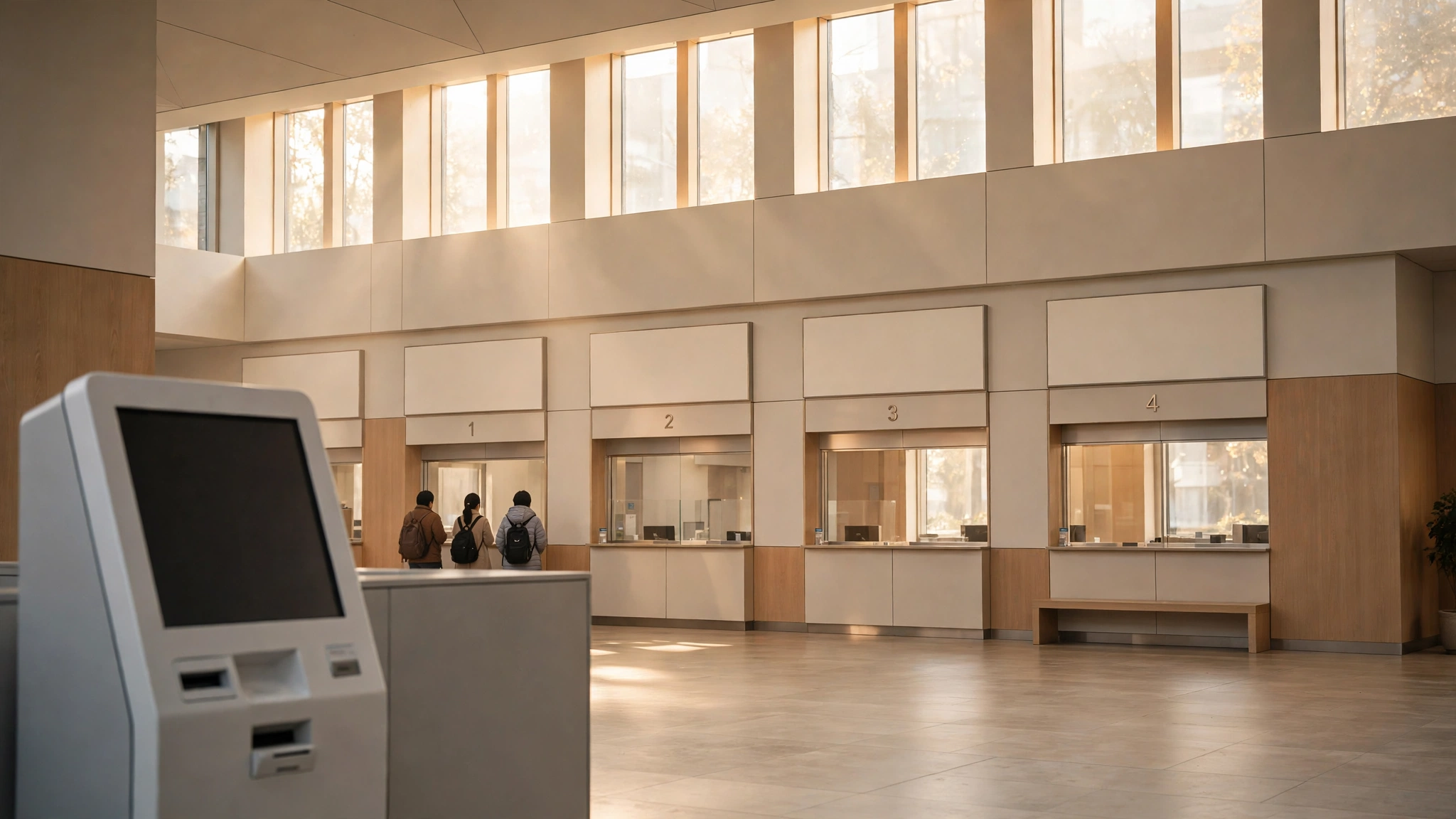
Service halls, resident hotlines and agency information teams carrying high enquiry volume, dominated by the same questions, with staff permanently saturated.
Seventy percent of counter and hotline work is one set of questions: what to bring, where to go, how long it takes — answered by humans, all day, every day
After a policy update, the website, hotline and counters drift apart, and residents make two trips for one task
Every digitization proposal sounds like a platform: long timelines, platform budgets, existing systems replaced — and never gets approved
What you get
| Component | What is included | Deliverable |
|---|---|---|
| Agency policy Q&A | A Q&A base built on your issued policy and service documents, answers carrying their source | The Q&A base and its citation rules |
| Guidance & checklists | Per-service guidance and document checklists, revised in step with source documents | Guidance pages and checklist templates |
| Status lookup hookup | Connected to existing case systems under their own permission model, so residents self-serve status | A lookup channel with an access note |
| Backlog & peak handling | The desk takes first contact at peaks; accumulated enquiries sorted by urgency for staff | Triage logs and sorted queues |
| Human hand-off | Anything unanswerable or out of mandate goes to staff with the conversation summary attached | A hand-off log, item by item |
| Operations reporting | Monthly: volume handled, sampled answer accuracy, hand-off reasons by category | A monthly operations report |
How it runs
Source & scope pass
About two weeks: policy documents and top questions inventoried into an agreed scope and wording list
Single-module pilot
One module live on a limited channel; accuracy sampled; expand only on a pass
Module-by-module rollout
Guidance, checklists and lookup connected one at a time, each accepted separately
Monthly operation
Policy updates flow into the Q&A base; monthly reports reconcile; wording drift corrected on sight
Boundaries
Not included
- The desk makes no administrative decisions: it answers from published positions only; case judgments and discretion always go to staff
- It promises no outcomes in the agency’s name: timelines and results follow the official documents, quoted as written
- No rip-and-replace: the desk is a connection layer — what can integrate, integrates; what cannot, runs on standard channels
What we need from you
- The current, valid set of policy and service documents, with updates supplied as issued
- A status interface or an agreed standard hookup for the lookup module
- One business counterpart owning wording approval and sampling
How engagement and quoting work
Contracted per module, accepted per module: pilot one, judge it on sampled accuracy, then decide the rest. Government contracts run through the contract payment channel; cooperative purchasing and multi-year frameworks can be discussed. Timelines run in weeks, not platform-program queues. Pricing is per module and channel count, set out in the proposal before work begins.
Questions on this page
Who answers for a wrong answer?
The Q&A base speaks only from documents your agency issued; sampling runs monthly and errors are corrected item by item with a trail. Where a source document is itself ambiguous, we flag it for the agency to clarify rather than improvise.
How is resident data handled?
Status lookups ride the existing systems’ permission model; the desk is a channel and builds no resident database of its own. Data-processing terms sit in the contract annex.
Our legacy system has no interface. Dead end?
No. Q&A and guidance modules need no system integration and go first; the lookup module waits until an interface exists — contracted and accepted separately.
Which languages are supported?
Q&A bases are built per language from your issued documents in that language; where no official version exists, translation is reviewed and approved before launch.
Who answers for a wrong reply from the front desk?
The answer library goes live only after your agency signs it off, and every exchange is logged. Anything outside the library routes to a human with the reason stated; the desk never improvises policy.
Can it connect to our existing booking and ticketing systems?
Yes. The desk reads availability and ticket status through their interfaces and replaces nothing; older systems without an interface start on structured forms, at a pace your agency sets.
How do we start?
Use the contact page with your agency type and the channel you most want relieved. We run the source pass first and return a module proposal with a schedule.
Related
Residents ask the desk first; counters breathe
Tell us where it hurts first. Scoping and a written quote come before anything starts; looking costs nothing.
Or ask Leo, the assistant at the bottom right, first — get the questions clear before you write to us.