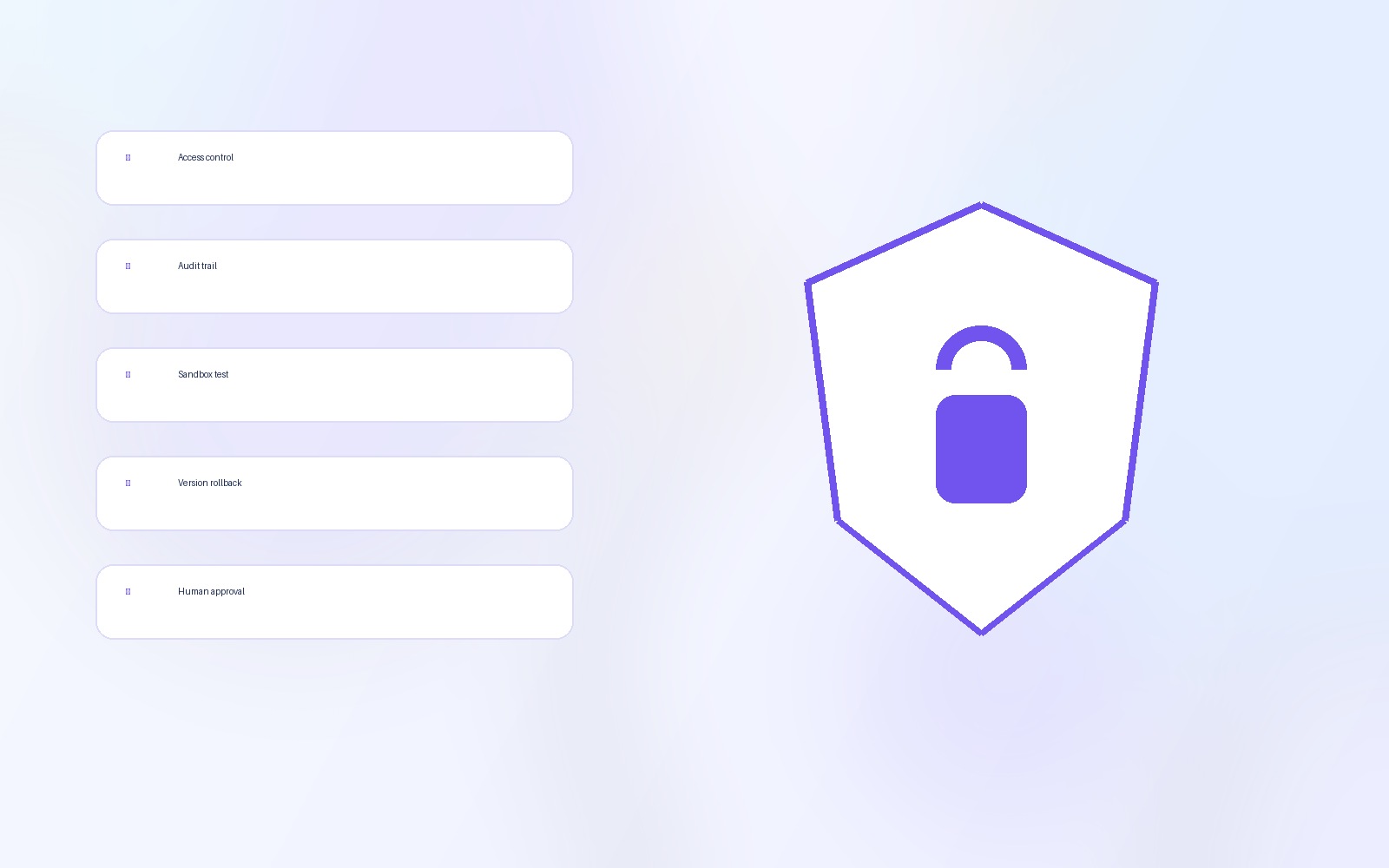
Six principles of control
Safety belongs in the whole loop—from data entry through advice and execution.
Least privilege
Grant only the access needed for the current task.
Audit trail
Record who proposed or executed an action and on what basis.
Sandbox
Test workflow or configuration changes in an isolated scope first.
Rollback
Keep recoverable versions and clear rollback conditions.
Approval
Set review thresholds for sensitive or high-impact actions.
Limits
Bound budget, frequency, scope, calls, and concurrency.
Boundary examples
The system may suggest, summarize, simulate, and draft. High-impact or irreversible actions must remain under authorized human control.
Separate public sites from internal systems
Public pages can explain capabilities and principles; they must never contain secrets, customer records, internal prompts, or infrastructure details.
Public
Products, guides, policies, and public contact details.
Controlled
Customer context, configurations, and audit records.
Never public
Secrets, tokens, passwords, admin information, and infrastructure detail.
Humans remain accountable
AI can improve preparation and consistency, but people remain responsible for meaningful decisions.
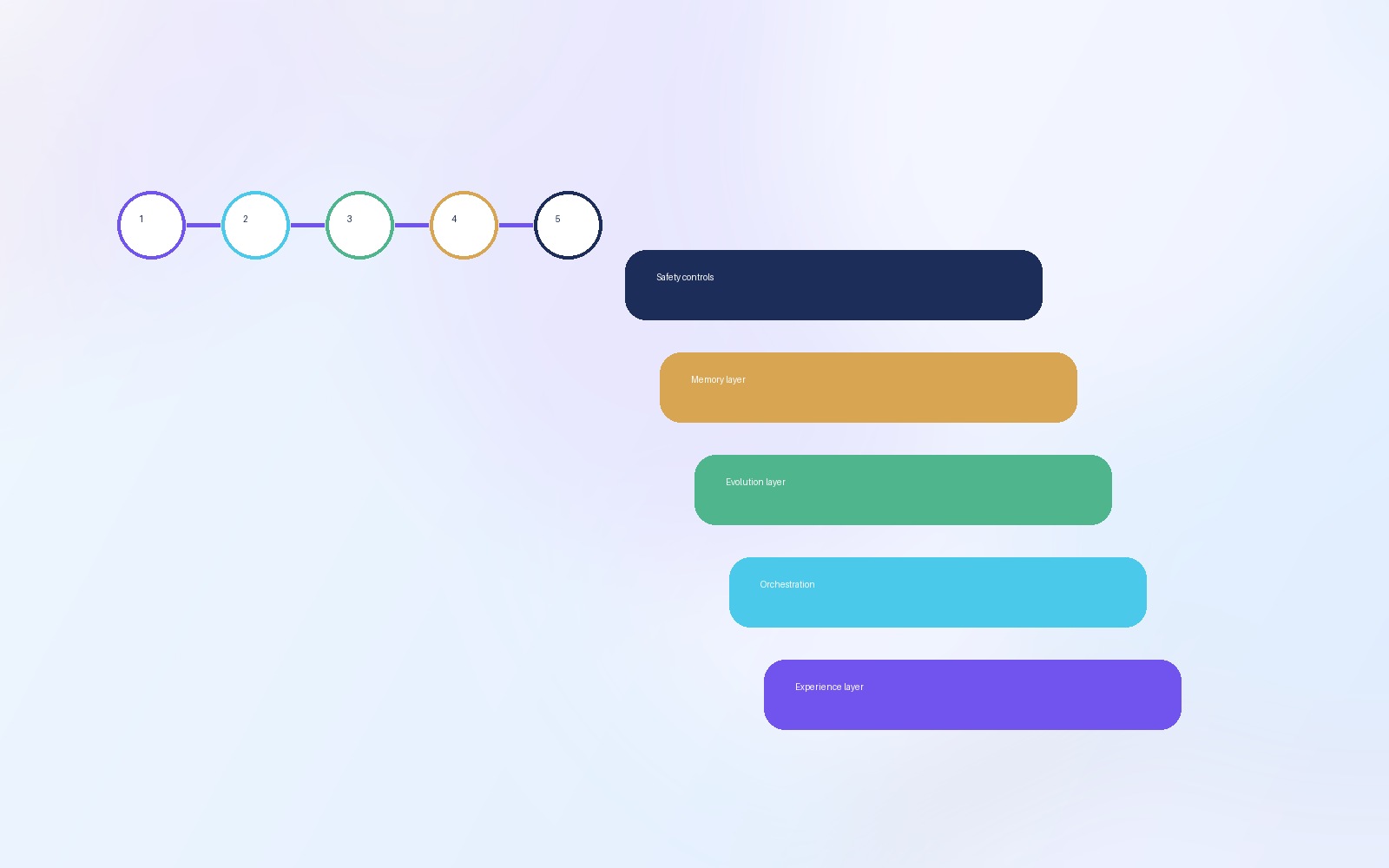
Give every team a continuously improving AI company system.
Begin with one bounded, measurable scenario. Build memory, insight, and controlled evolution gradually.
Bring Living Intelligence into real work.
Book a demo and find the right first scenario for your team.