Improve like a careful scientist
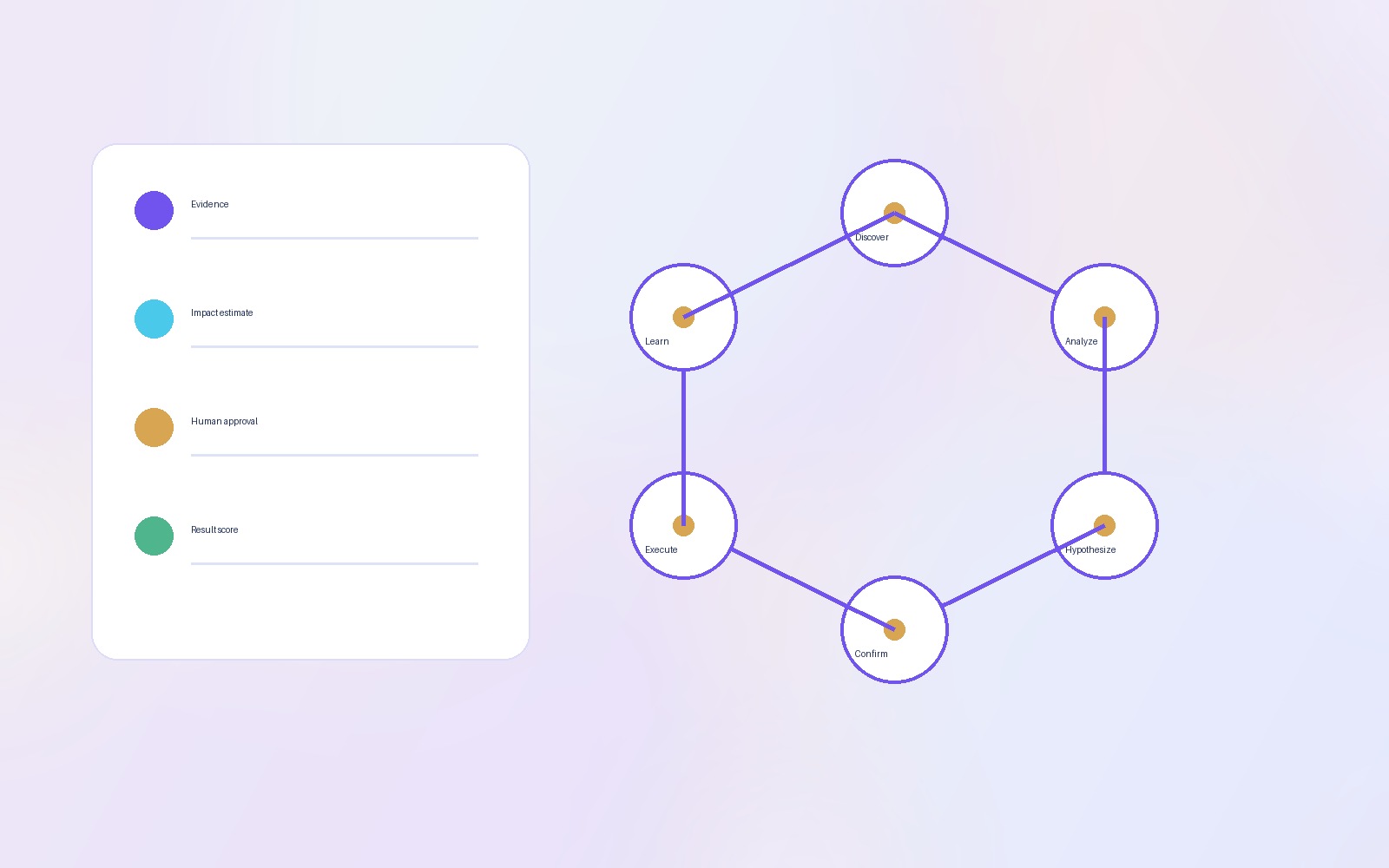
Proposals should be small, testable, and reversible, with clear measurements and a return path.
Hypothesis-led
Write a testable statement instead of a vague improvement claim.
Strategy recall
Score previous approaches by scope, outcome, effort, and side effects.
Weighted priority
Rank proposals by impact, risk, cost, confidence, and reversibility.
Result recovery
Use actual results to update memory and later suggestions.
Suggested cadence
Use daily incremental learning for low-risk improvements and weekly reviews for cross-workflow changes.
Human approval stays essential
Customer commitments, financial actions, permissions, production changes, and professional decisions require accountable approval.
Low-risk
Index updates, summaries, and draft reports.
Needs approval
Public copy, thresholds, and customer messages.
Never automatic
Payments, legal judgment, medical judgment, or privilege escalation.
What growth means
Better growth means fewer repeated mistakes, earlier warning, clearer reasons, and more reliable delivery.

Give every team a continuously improving AI company system.
Begin with one bounded, measurable scenario. Build memory, insight, and controlled evolution gradually.
Bring Living Intelligence into real work.
Book a demo and find the right first scenario for your team.