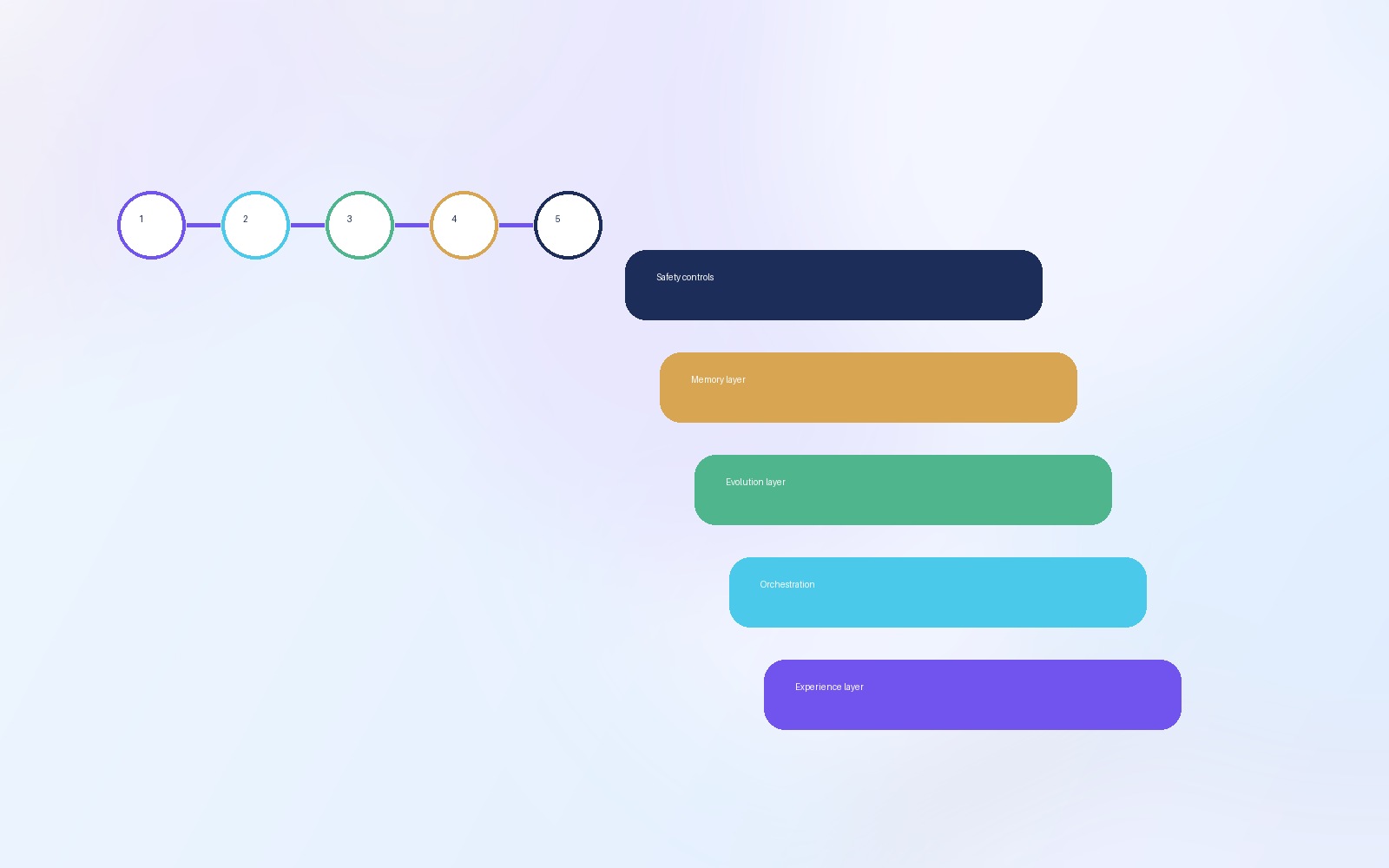
Five coordinated layers
Clear interfaces keep memory, permissions, and execution from being mixed together.
Experience layer
Conversation, dashboards, reports, and approval points.
Orchestration
Goals, tasks, roles, tools, and review steps.
Evolution
Scoring, hypotheses, experiments, and improvement proposals.
Memory
Semantic retrieval, graph relationships, time layers, and lesson state.
Safety
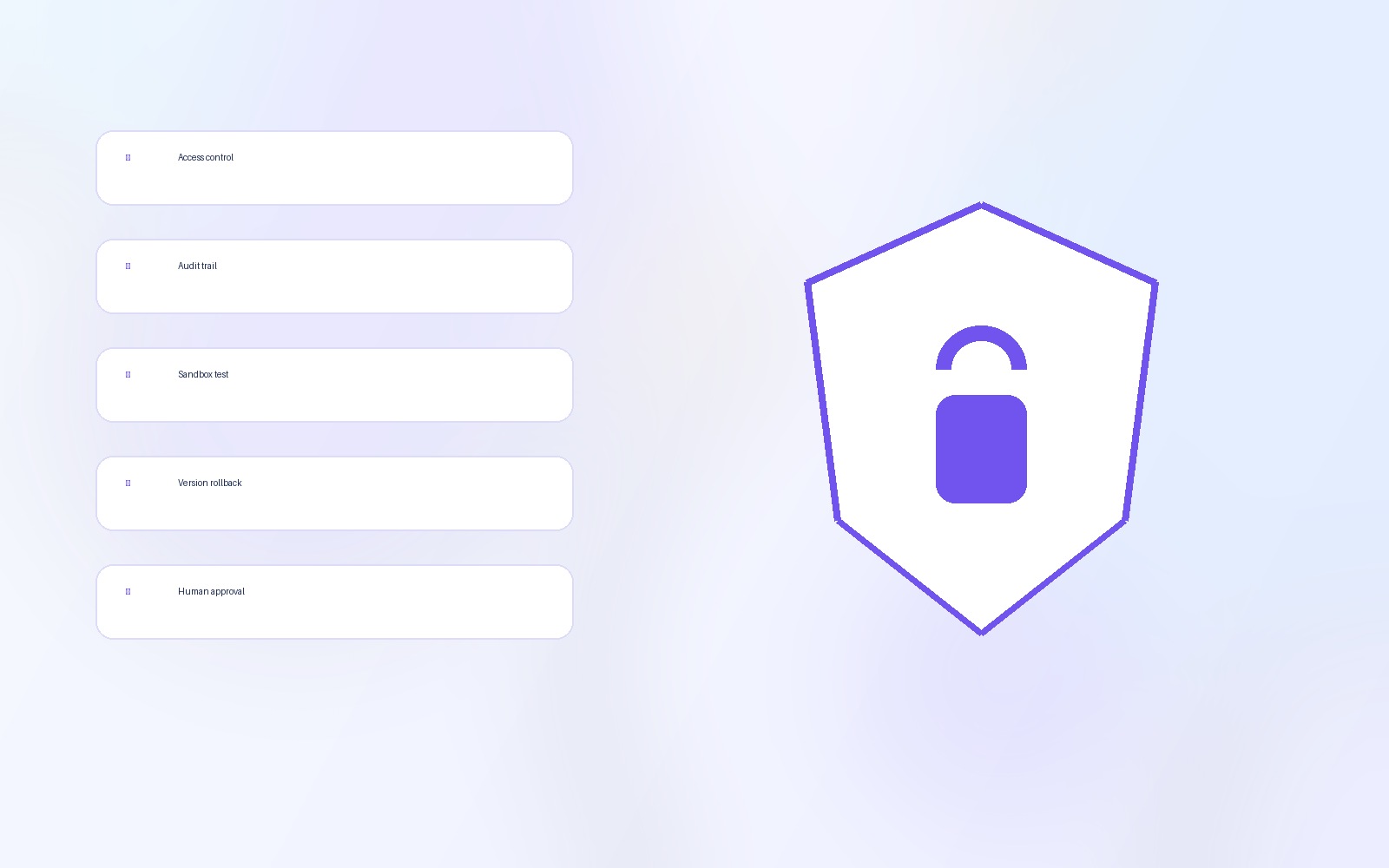
Permissions, audit, versions, sandbox, budget, and boundaries.
From event to experience
Standardize, classify, and relate events before allowing them to influence later retrieval and suggestions.
Execution is not the end
Execution results return to memory and audit as evidence for future recommendations.
Input
Events, files, conversations, data, and approvals.
Understanding
Retrieve context and form bounded options.
Action
Operate only within permission and review constraints.
Replaceable, evolvable components
Models, indexes, databases, and tools can change; interfaces, data boundaries, and audit rules should stay clear.
Give every team a continuously improving AI company system.
Begin with one bounded, measurable scenario. Build memory, insight, and controlled evolution gradually.
Bring Living Intelligence into real work.
Book a demo and find the right first scenario for your team.