Remembered does not mean visible to everyone
Enterprise knowledge needs boundaries. The system must know what can be public, what is limited to a project group, what needs approval, and when it should expire, archive, or be deleted.
S
Source management
Every record includes source, creation time, owner, and verification state.
P
Permission tiers
Restrict visibility by role, project, region, or sensitivity.
L
Lifecycle controls
Define review, decay, archive, and deletion intervals.
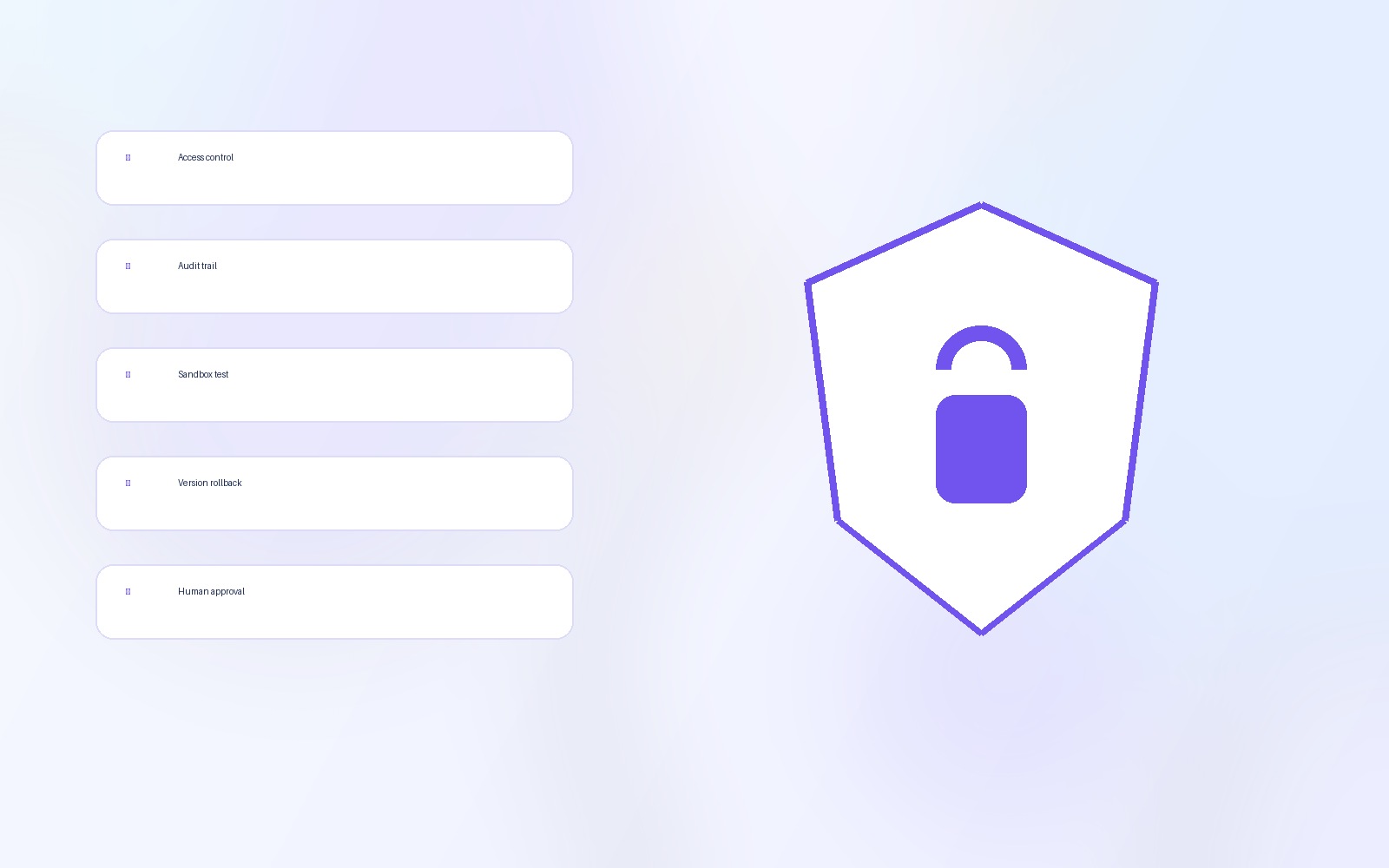
Make errors visible, repairable, and learnable
When an answer is wrong or information expires, the system should retain the revision reason and history rather than silently overwriting a record. That makes the organization more reliable over time.
Governance principle: retaining history is not infinite retention; traceability is not universal access; learning is not automatic permission expansion.
Put “who decides what” into the system
O
Content ownerConfirms business knowledge and service boundaries.
T
Technical ownerMaintains retrieval, logs, access, and runtime quality.
R
Risk ownerDefines approval thresholds and exception handling.
U
Business userSupplies feedback, flags errors, and brings real needs.
Start living intelligence with one real workflow.
Start with a measurable, traceable, controllable scenario and retain learning after every cycle.
Turn insight into verifiable evolution.
Book a demo to define the best first scenario.